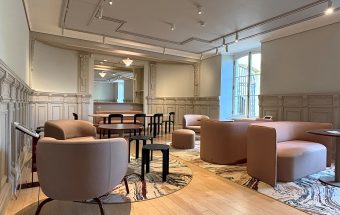
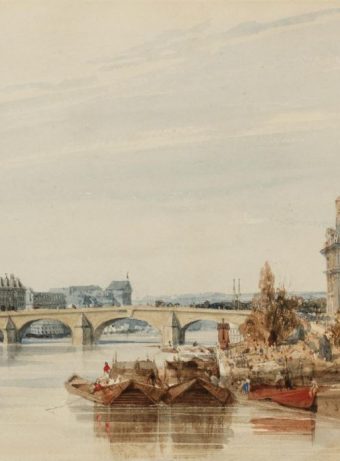
On this basis, the exhibition on the 5th floor of the museum highlights our city and invites visitors to engage in a dynamic dialogue with the collections. The space is designed to offer a multi-dimensional, multi-sensory and experimental experience, accessible to all audiences and inviting participation.
Cityvisions Photo Challenge
On cityvisions.lu, we’ve pinpointed the exact locations from where the city views in our exhibition were created – now it’s your turn!
Use the GPS coordinates, visit these spots, and capture your own photo from the same perspective. Share your vision with us!
Cityvisions.lu
+++ Nouveau City Lab 3.0+++
Installation “Then, there & them”
> 17.01.27
As part of Luxembourg Pride Week (2–11 July), the Lëtzebuerg City Museum, in collaboration with the Rainbow Center, presents an installation exploring the theme of queerness. The exhibited project, entitled Then, There & Them, is the outcome of an group of artists led by the artist Leire de Meer.
At the heart of the installation is the staging of a picnic: the remains of a meal are scattered across a blanket. Masks hang from the ceiling, and a large cookbook resting on a table invites visitors to open it. A group of queer people has disguised themselves in order to venture into the world and unsettle it. What is revealed when we hide our faces? Here, queer bodies resist a totalizing gaze that seeks to categorize them.
The project's title is inspired by the concept of queerness developed by the theorist José Esteban Muñoz, who understood it as an attempt to imagine a future beyond the hardships of the present—a possible "then" and "there." "Them," meanwhile, refers to the queer community, playing on the English gender-neutral pronoun, which can be used in both the singular and the plural.
The installation is presented within the City Lab space of the exhibition City Visions, an experimental format shaped each time by a different community of city residents. Here, the museum moves away from its traditional role as a single authoritative narrator and instead assumes the role of a facilitator, allowing communities to define their own terms, tell their own stories, and develop their own forms of expression
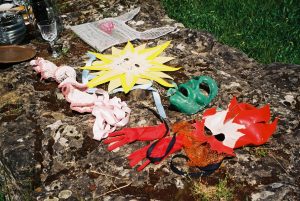
photo: Magali Medinger